
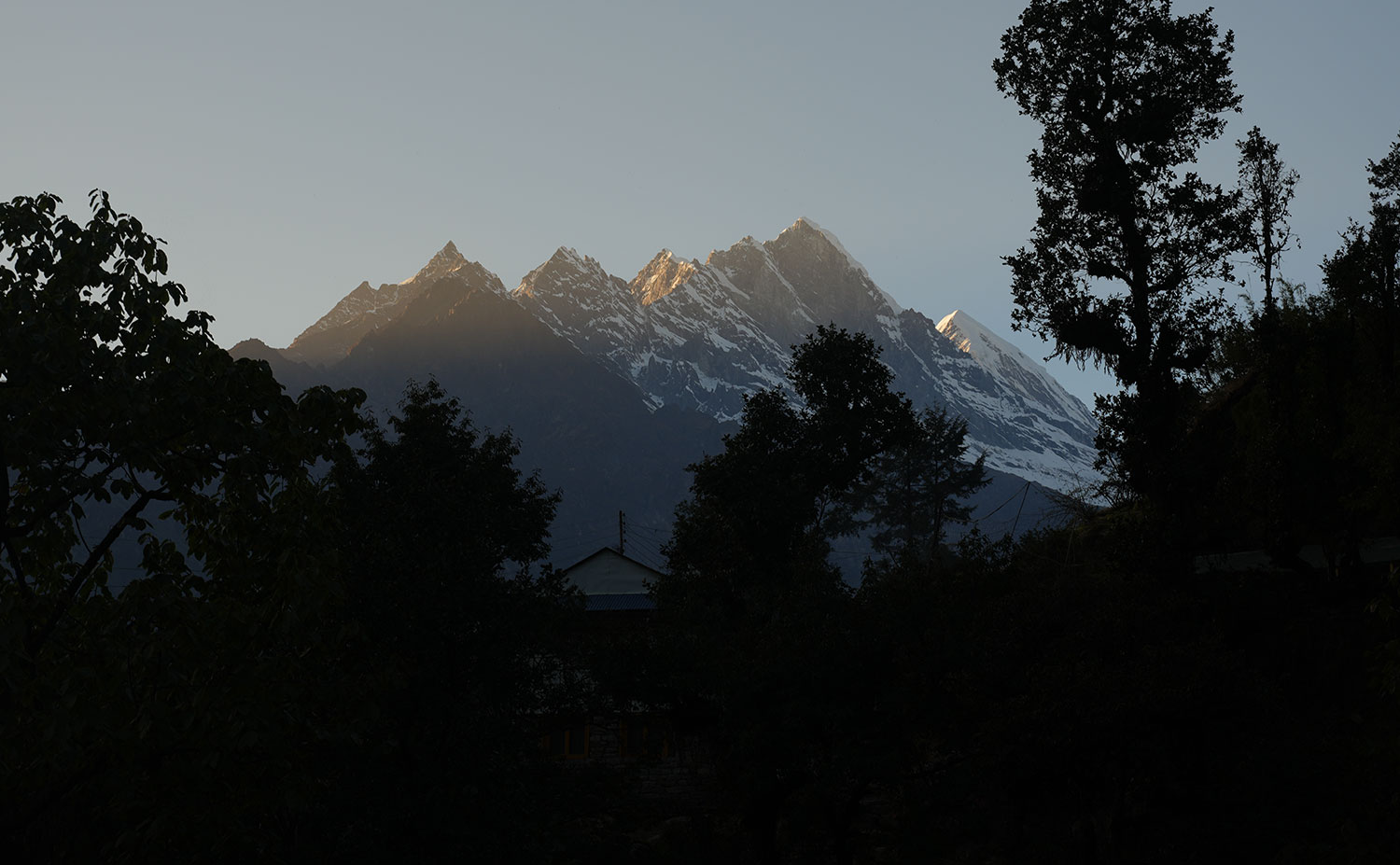

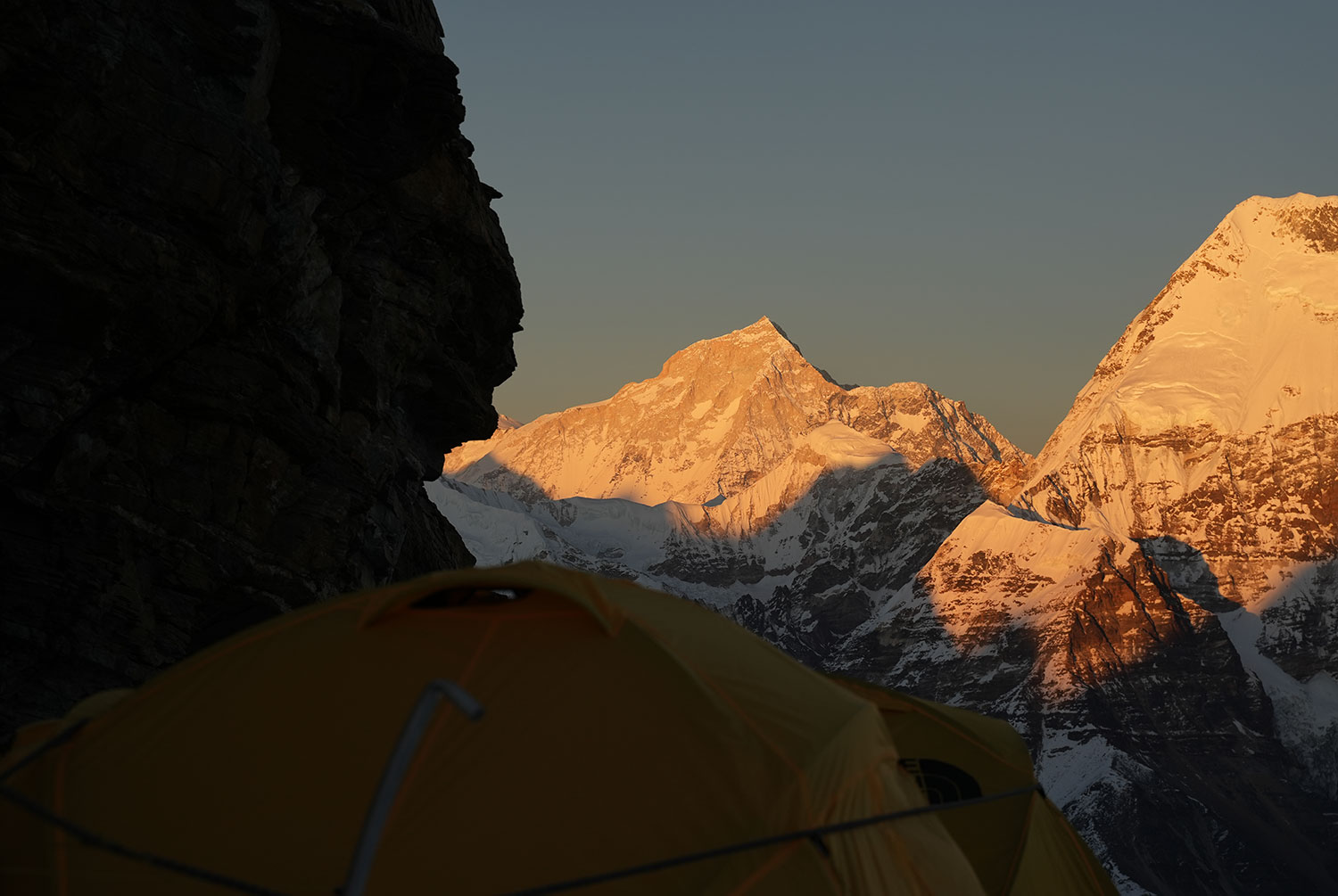

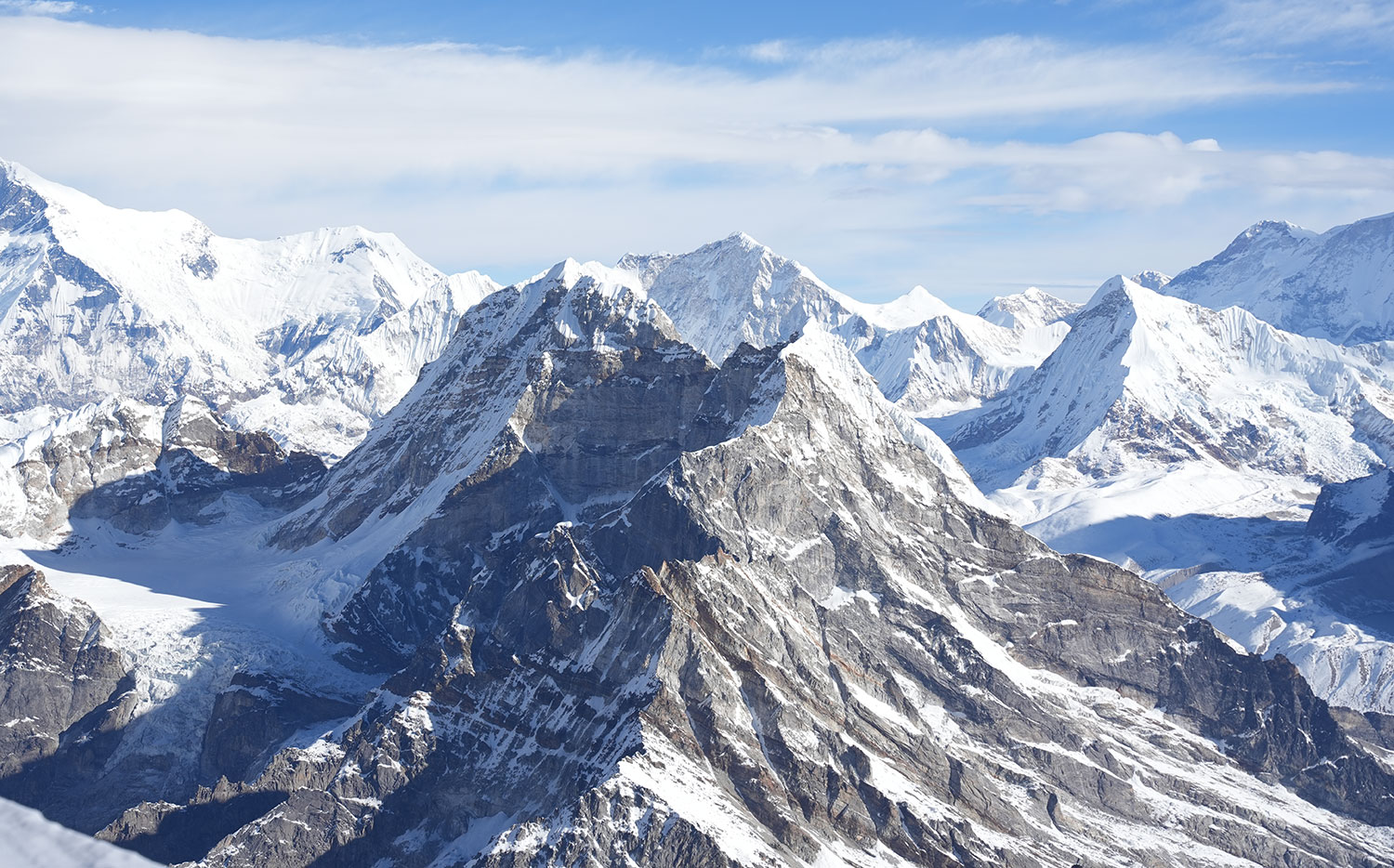
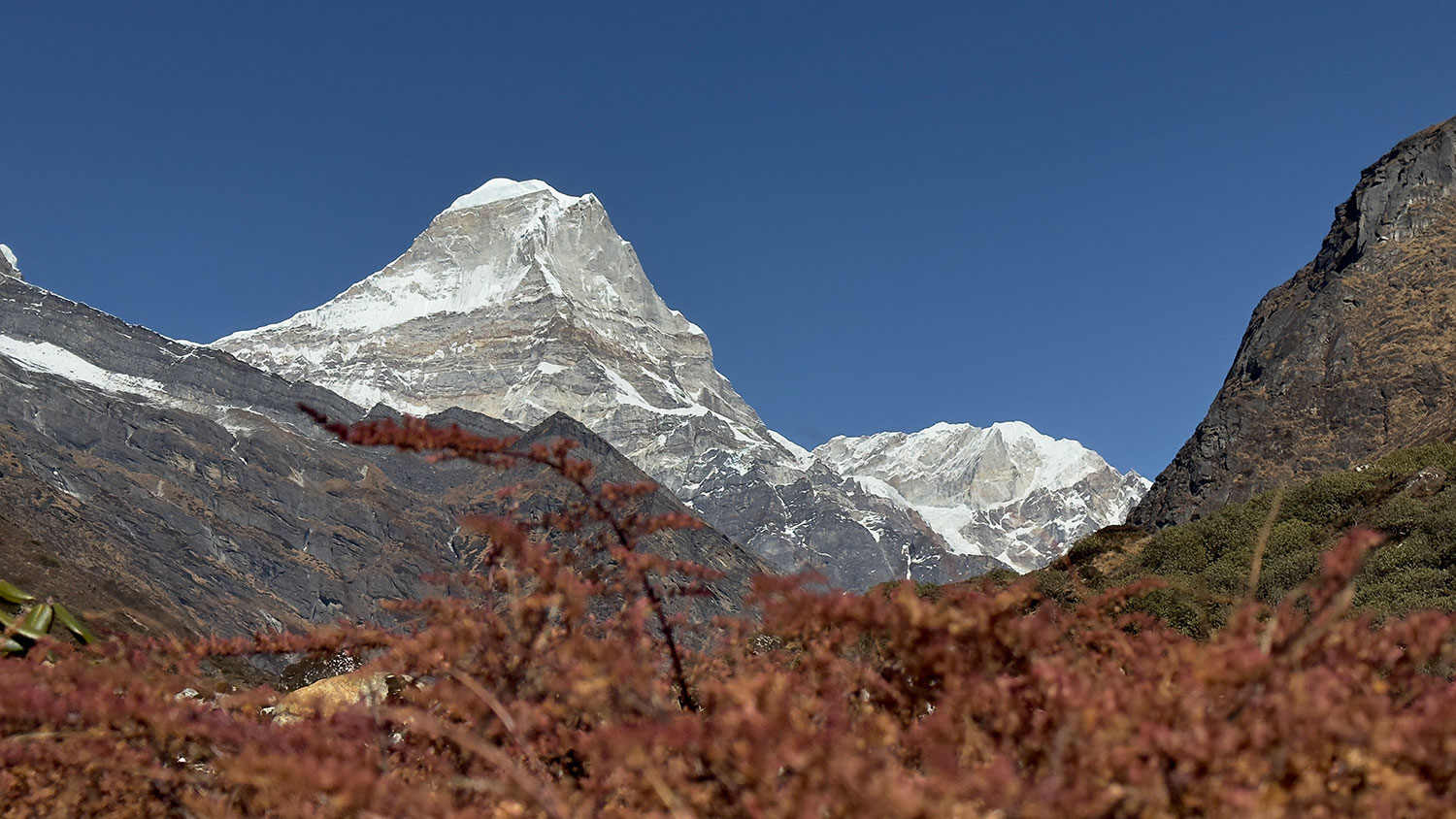
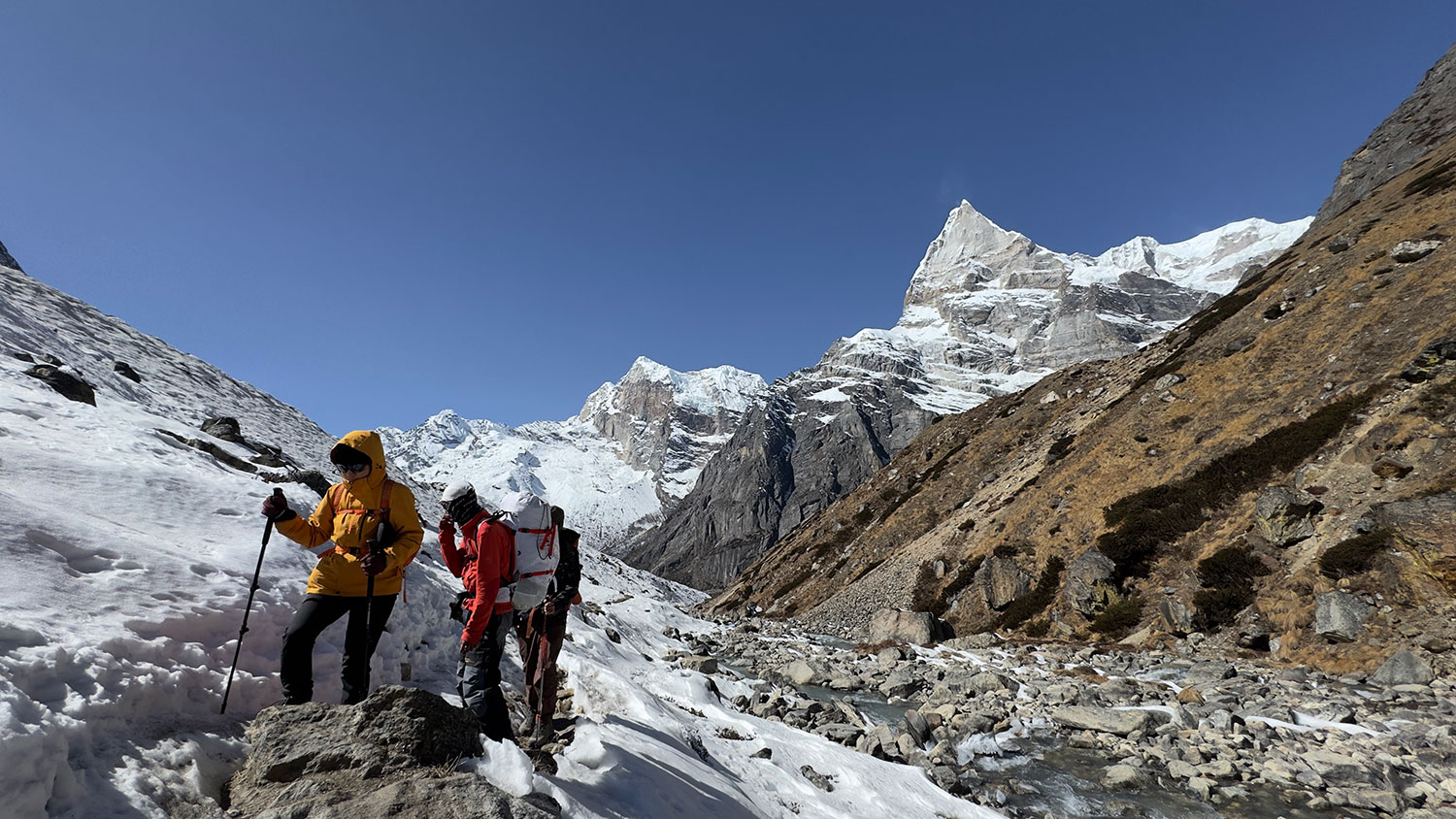

Mera Peak, rising to 6,476 meters in the heart of Nepal’s Khumbu region, is one of the most sought-after trekking peaks in the Himalayas.
Mera Peak Climing Overview
Duration:
A standard Mera Peak expedition spans 16–17 days, encompassing the trek to Base Camp, the summit ascent, and the return journey to Lukla.
Summit Day:
Following 4–5 days of trekking, climbers establish themselves at High Camp (5,800 m / 19,000 ft). The final push to the summit (6,476 m / 21,247 ft) typically requires 6–8 hours, conditions and acclimatization permitting.
Difficulty Assessment:
Mera Peak is classified as a moderately technical climb. While accessible to those with fundamental mountaineering skills, it remains physically demanding due to altitude and the nature of the terrain.
Mera Peak Climing Outline Itinerary
Day 01: Arrival in Kathmandu
Day 02: Preparation and Briefing in Kathmandu
Day 03: Drive to Munthali, Fly to Lukla, Trek to Paiya(Chutok): 40-minute flight, 5-6 hours
Day 04: Trek to Panggom:5-6 hours
Day 05: Trek to Ningsow: 4-5 hours
Day 06: Trek to Chhatra Khola: 7-8 hours
Day 07: Trek to Kothe: 6-7 hours
Day 08: Trek to Thaknak: 3-4 hours
Day 09: Trek to Khare: 2-3 hours
Day 10: Acclimatization and pre-climb training
Day 11: Climb to Mera High Camp: 6-7 hours
Day 12: Mera High Camp to Summit and back to Khare: 8-9 hours
Day 13: Trek to Kothe: 4-5 hours
Day 14: Trek to Thuli Kharka: 5-6 hours
Day 15: Thuli Kharka to Lukla via Zatrwa La Pass
Day 16: Fly to Lukla then fly to Munthali(20 minutes) and drive to Kathmandu
Day 17: Final Departure
Mera Peak Climing Essential Information
MERA PEAK (6,476 m)-Your Introduction to High-Altitude Climbing
Mera Peak, soaring to 6,476 meters within Nepal’s legendary Khumbu region, stands as one of the Himalaya’s most coveted trekking summits. Positioned southeast of Mount Everest, it presents explorers with a compelling mix of stunning vistas, approachable climbing demands, and genuine altitude exposure—making it an exceptional choice for both aspiring mountaineers and experienced trekkers seeking their next challenge.
The Journey to Mera Peak-Base Camp & Access
The adventure commences in Kathmandu, Nepal’s energetic capital, followed by a short but spectacular flight to Lukla—the traditional entry point to the Khumbu. From Lukla, climbers may select between two primary itineraries:
1: The Zatrwa La Pass Route
This favored approach winds through picturesque Sherpa villages including Chutanga, Thuli Kharka, Kothe, Thangnak, and Khare. Along the way, walkers are immersed in authentic Sherpa traditions, warm hospitality, and the striking terrain of the Solukhumbu district.
2: The Paiya Route
For those craving a more remote experience, the Paiya route provides a quieter passage through the lower Solukhumbu. The path leads through Panggom, Nigsow, Chhatra Khola, Kothe, Thangnak, and onward to Khare. While less frequented, trekkers should be aware that services and infrastructure along this option may be more basic compared to the standard Lukla corridor.
Advantages of Climbing Mera Peak
Ascending Mera Peak delivers meaningful rewards and preparation for mountaineers. Primary benefits encompass:
Exposure to High Altitude:
Acquire firsthand experience at significant elevation and develop essential acclimatization practices for future climbs such as Everest, Lhotse, Ama Dablam, Makalu, or Kanchenjunga.
Technical Skill Enhancement:
Mera Peak features varied terrain—rock, snow, and ice—allowing climbers to practice and perfect techniques including crampon usage, ice axe handling, and fixed-rope navigation.
Stepping Stone to Greater Heights:
Frequently regarded as a training summit, Mera Peak equips individuals with the assurance, endurance, and competence required for more demanding Himalayan ascents.
Guide-to-Climber Ratios
Safety and individualized attention are fundamental to a successful climb. Adventure Fourteen Summit offers the following standard guide arrangements:
A: 1:1 Ratio (One Guide per Climber): Recommended for those with limited experience who desire dedicated support, particularly during the summit phase.
B: 1:2 Ratio (One Guide for Two Climbers): Standard for climbers possessing moderate experience and sound acclimatization practices.
C: 1:3–4 Ratio (One Guide for Three to Four Climbers): Appropriate for well-conditioned, experienced teams capable of moving efficiently through technical sections with periodic guidance.
Mera Peak represents more than a climb—it is an immersion into Nepal’s iconic landscapes, a measure of personal endurance, and a compelling entry point into the thrilling realm of high-altitude mountaineering.
Best Season
Mera Peak ranks among Nepal’s most attainable high-altitude trekking summits, rewarding climbers with spectacular Himalayan views and a deeply satisfying ascent. Timing your expedition is crucial for safety and success:
Spring (March to May):
Spring constitutes the premier season for Mera Peak. Consistent weather, comfortable temperatures, and favorable snow conditions characterize this period, creating ideal circumstances for both trekking and climbing. Trails come alive with flowering rhododendrons, infusing the journey with vibrant color.
Autumn (September to November):
Autumn follows as the second-most favorable season, arriving after monsoon rains subside. Crystal-clear skies, superb visibility, and dry trails prevail—perfect for climbers seeking unobstructed panoramic views of the surrounding peaks.
Standard ServiceWhats Included?
- Transportation: Airport pickup & drop-off in private transport; Domestic flights: Kathmandu–Lukla–Kathmandu
- Accommodation: 3 nights’ hotel in Kathmandu (Bed & Breakfast plan); Lodge/tea house accommodation during the trek; Tented accommodation at Mera Peak High Camp
- Meals: 3 meals per day during trekking & climbing
- Documentation/Permits: Mera Peak climbing permits; Makalu Barun National Park fee
- Equipment/Accessories: Group climbing equipment (ropes, ice screws, snow bars, etc.); Personal climbing gear rental (if required); First aid kit & emergency oxygen; Adventure Fourteen Summit–branded T-shirt, cap, and duffel bag
- Human Resource: Experienced trekking guide & climbing Sherpa (2:1 ratio for summit day); Porters for luggage (2 trekkers = 1 porter, max 20–25kg)
- Tax/Service Charge: Staff wages, insurance, and equipment
Whats Excluded
- International airfare
- Nepal visa fee (USD 50 for 30 days, on arrival)
- Personal trekking gear and sleeping bag
- Meals in Kathmandu and Pokhara (except breakfast)
- Travel insurance (compulsory, with emergency rescue)
- Tips for guides, porters, and staff
- Extra hotel nights due to early return or delays
- Personal expenses (drinks, snacks, hot showers, battery charging, etc.)
Mera Peak Climing Detailed Itinerary
Arrival in Kathmandu
Upon arrival at Tribhuvan International Airport, complete the formalities for your Nepal entry visa at immigration. Our representatives will greet you outside the terminal and transfer you to your hotel. A short briefing will cover your upcoming adventure and any documents required for the trek.
Accommodation : 3 star hotel Meals : B/B
Preparation and Briefing in Kathmandu
Today is dedicated to completing all paperwork, permits, and necessary formalities. You’ll also attend detailed briefings covering Mera Peak logistics, including equipment, accommodation, trip duration, and safety protocols. This is a great opportunity to meet your climbing team and fellow trekkers.
Accommodation : 3 star hotel Meals : B/B
Drive to Munthali, Fly to Lukla, Trek to Paiya(Chutok): 40-minute flight, 5-6 hours
Drive to Munthali and board a scenic 40-minute flight to Lukla. From Lukla, trek 5–6 hours to Paiya (Chutok), passing through lush forests, suspension bridges, and quaint villages. Enjoy panoramic Himalayan views as you settle into your lodge.
Accommodation : Lodge Meals : BLD
Trek to Panggom:5-6 hours
A moderate 5–6 hour trek through serene landscapes, rhododendron forests, and charming Sherpa villages. This day provides a gentle acclimatization while offering beautiful vistas of the surrounding peaks.
Accommodation : Lodge Meals : BLD
Trek to Ningsow: 4-5 hours
Trek 4–5 hours to Ningsow, enjoying scenic mountains, flowing rivers, and traditional villages. A moderate climb allows you to take in the serene environment and local culture.
Accommodation : Lodge Meals : BLD
Trek to Chhatra Khola: 7-8 hours
A challenging day through forests and rugged terrain, crossing streams and small settlements. Reach Chhatra Khola for a peaceful overnight stay, surrounded by the majestic Himalayan peaks.
Accommodation : Lodge Meals : BLD
Trek to Kothe: 6-7 hours
Cross diverse landscapes of forests and alpine meadows during a 6–7 hour trek. Kothe marks your arrival into higher elevations, offering spectacular mountain panoramas and a serene atmosphere.
Accommodation : Lodge Meals : BLD
Trek to Thaknak: 3-4 hours
Trek through alpine meadows and dense forests as you gradually ascend to Thaknak, a small settlement at the base of Mera Peak. This acclimatization stop prepares your body for higher altitudes while showcasing breathtaking Himalayan landscapes.
Accommodation : Lodge Meals : BLD
Trek to Khare: 2-3 hours
A short 2–3 hour trek to Khare, a picturesque village nestled at the foot of towering peaks. Enjoy acclimatization and prepare your body for the demanding summit push ahead.
Accommodation : Lodge Meals : BLD
Acclimatization and pre-climb training
Rest and acclimatise at Khare to prevent altitude sickness. Engage in pre-climb exercises and training, focusing on strength, endurance, and technical skills, including ice axe and crampon practice.
Accommodation : Tent Meals : BLD
Climb to Mera High Camp: 6-7 hours
Trek 6–7 hours to Mera High Camp, navigating steeper terrain. Enjoy stunning views of Mera Peak and the surrounding giants of the Himalayas. Overnight at high camp for acclimatisation before the summit attempt.
Accommodation : Tent Meals : BLD
Mera High Camp to Summit and back to Khare: 8-9 hours
Summit day begins early with a challenging climb over glaciers and steep sections. Reach the top and marvel at breathtaking Himalayan panoramas. Descend back to Khare for a well-deserved rest.
Accommodation : Lodge Meals : BLD
Trek to Kothe: 4-5 hours
Descend to Kothe over 4–5 hours, passing forests, streams, and small villages. Enjoy a relaxing evening in this peaceful Himalayan settlement.
Accommodation : Lodge Meals : BLD
Trek to Thuli Kharka: 5-6 hours
Trek 5–6 hours through spectacular Himalayan landscapes to Thuli Kharka. Gradual ascent allows continued acclimatization while soaking in the natural beauty.
Accommodation : Lodge Meals : BLD
Thuli Kharka to Lukla via Zatrwa La Pass
Cross the scenic Zatrwa La Pass, offering panoramic mountain views. Descend through lush forests and traditional Sherpa villages to reach Lukla, concluding your trekking journey.
Accommodation : 3 Star hotel Meals : BLD
Fly to Lukla then fly to Munthali(20 minutes) and drive to Kathmandu
Fly back to Munthali and drive to Kathmandu in a short, scenic journey. Check into your hotel and relax, reminiscing about your Himalayan adventure.
Accommodation : 4 Star hotel Meals : B/B
Final Departure
Transfer to Kathmandu airport for your onward journey. Take a final look at the city and cherish memories of your Mera Peak expedition, carrying the spirit of the Himalayas with you.